
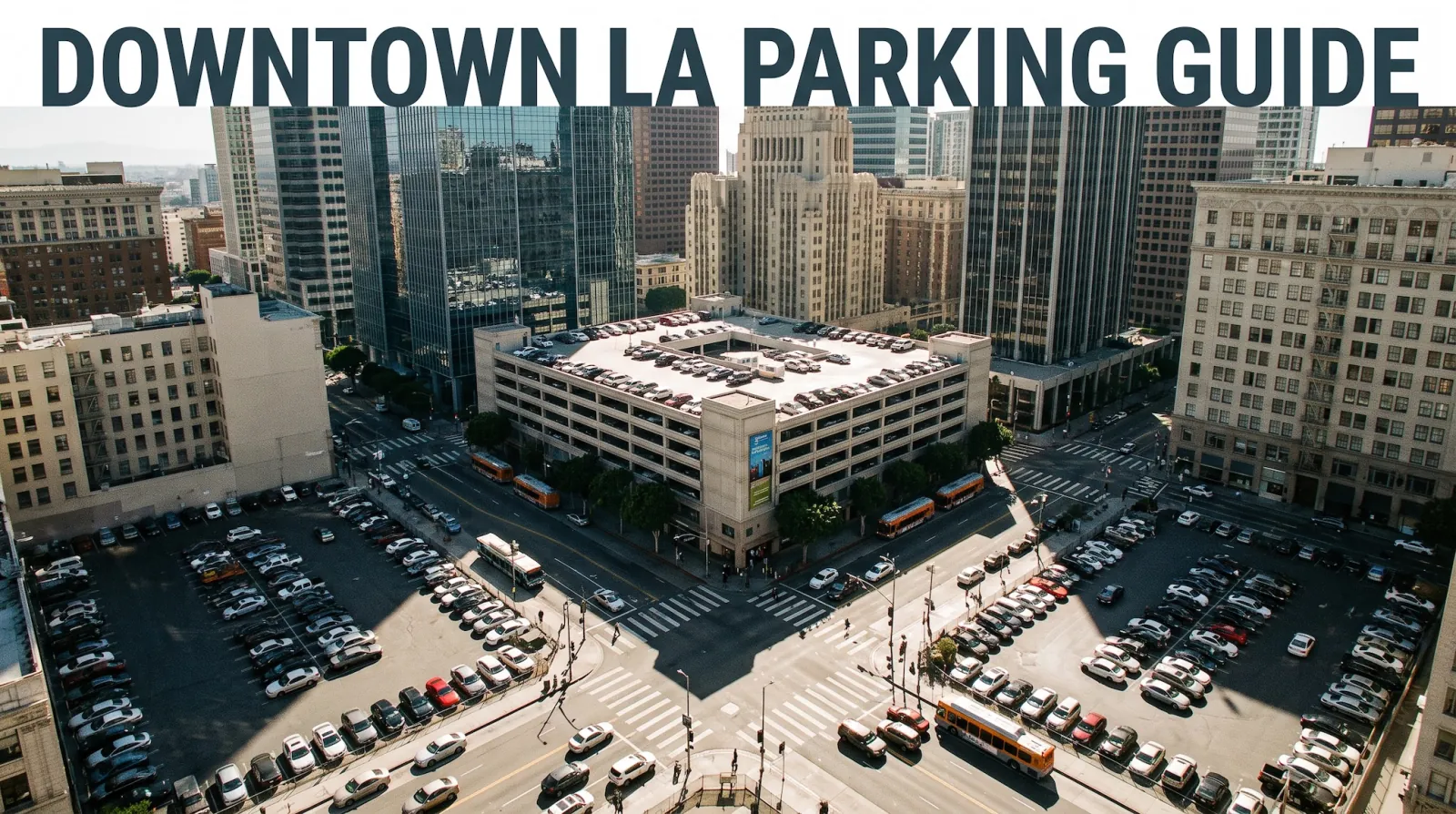
Downtown Los Angeles is a parking environment all its own. It mixes dense residential lofts, office towers, entertainment venues, and some of the strictest rush-hour enforcement in the city. Get it right and DTLA is walkable and manageable; get it wrong and you're paying for a tow. Here's how to park downtown without the expensive surprises.
What makes DTLA parking different
- Rush-hour tow-away zones. Many major downtown corridors ban parking during morning and evening rush hours. This is the biggest and most expensive trap in the area — park at 3:59 PM and you're fine; at 4:01 PM your car can be towed.
- Heavy metering. Most curb space downtown is metered, often with time limits and enforced hours that run late, especially near venues.
- Event surges. Games, concerts, and conventions bring temporary restrictions and a flood of demand that empties every legal spot.
- Residential loft blocks add permit zones and street sweeping to the mix in the historic core, the Arts District, and South Park.
Rush-hour tow-away zones: the DTLA killer
If you learn one thing about parking downtown, make it this. Major arteries convert to tow-away zones during peak commute hours to keep traffic moving. The signs are posted, but they're easy to miss when you're focused on finding any spot at all. Park in one of these during the restricted window and you're not looking at a ticket — you're looking at a tow, which with 2026 rates runs $450–$600 or more once you add the tow fee, daily storage, and the release fee.
Rule of thumb: on any big downtown corridor, assume rush-hour restrictions apply and read the sign before you park between roughly 7–9 AM and 4–7 PM.
Meters and time limits
Downtown is metered almost everywhere. A few things to watch:
- Enforced hours run late near venues and nightlife — a meter that's free at 7 PM elsewhere may be enforced downtown.
- Time limits cap how long you can stay even if you keep feeding the meter.
- Holiday and Sunday rules vary block to block; when in doubt, read the meter's posted schedule.
Event nights and temporary restrictions
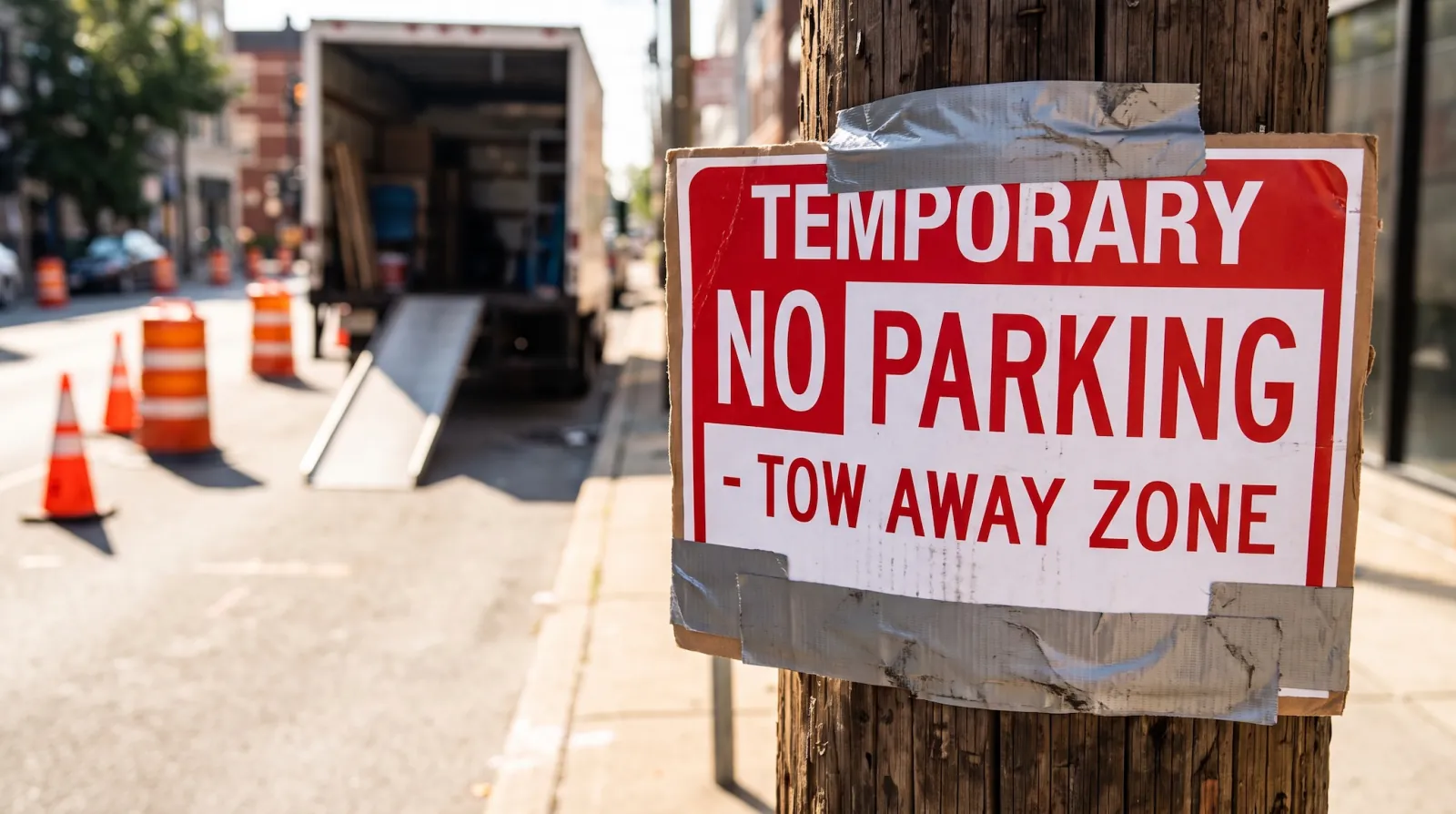
When there's a game, a concert, or a convention, expect temporary "No Parking" signs and surge demand. A block that's legal in the afternoon can be posted tow-away by evening. If you're parking near a venue on an event night, a paid structure is almost always worth it — the tow risk on the surrounding streets is real.
Where to park in DTLA
- Parking structures and lots are the low-risk choice, especially for events and nightlife. Many offer flat evening rates.
- Metered street parking works for daytime errands — mind the time limit and the rush-hour windows.
- Residential blocks in the Arts District and historic core may have permit zones and sweeping; read every sign if you're parking there overnight.
Parking by district
Downtown is really a cluster of distinct neighborhoods, each with its own parking feel.
The Historic Core and Financial District. Dense, metered, and ringed by rush-hour tow-away corridors. Office-hours demand is intense; evenings ease up but nightlife pockets keep meters enforced late. Structures are plentiful and usually the right call.
The Arts District. Former industrial blocks turned residential and nightlife. Street parking exists but is a mix of permit zones, sweeping, and unmarked stretches that fill on event and weekend nights. Read every sign — the rules change block to block here.
South Park (around the arena and convention center). This is event-parking ground zero. On game and concert nights, temporary restrictions and surge pricing dominate, and the surrounding streets carry heavy tow enforcement. A pre-booked structure is almost always worth it.
Little Tokyo, the Fashion District, and the Toy District. Heavily commercial, metered, and busy during the day with loading zones and short time limits. Overnight is quieter but watch for early-morning sweeping and delivery restrictions.
Structures, monthly parking, and the real cost
For DTLA residents and regular commuters, the honest answer is often that a monthly parking spot in a structure is cheaper than the tickets and tows you'll collect fighting for street space. Downtown's rush-hour tow-away enforcement is aggressive by design — the city wants those lanes clear at peak hours — so the downside of getting street parking wrong is unusually high. If you do park on the street, treat every major corridor as tow-away during commute windows unless a sign clearly says otherwise, and never leave a car in a metered spot past its posted enforcement hours assuming it's "probably fine."
The DTLA parking checklist
- Check for rush-hour tow-away hours before parking on any major corridor.
- Read the meter's enforced hours and time limit.
- Look for event-night temporary signs near venues.
- Check street sweeping on residential blocks.
- Photograph the signs by your car.
What it costs when you get it wrong
- Metered and time-limit tickets: around $63–$73
- Rush-hour and no-stopping violations: $93 and up
- A tow: $450–$600 or more
Downtown's rush-hour tows make it one of the most expensive places in the city to get parking wrong.
For DTLA residents
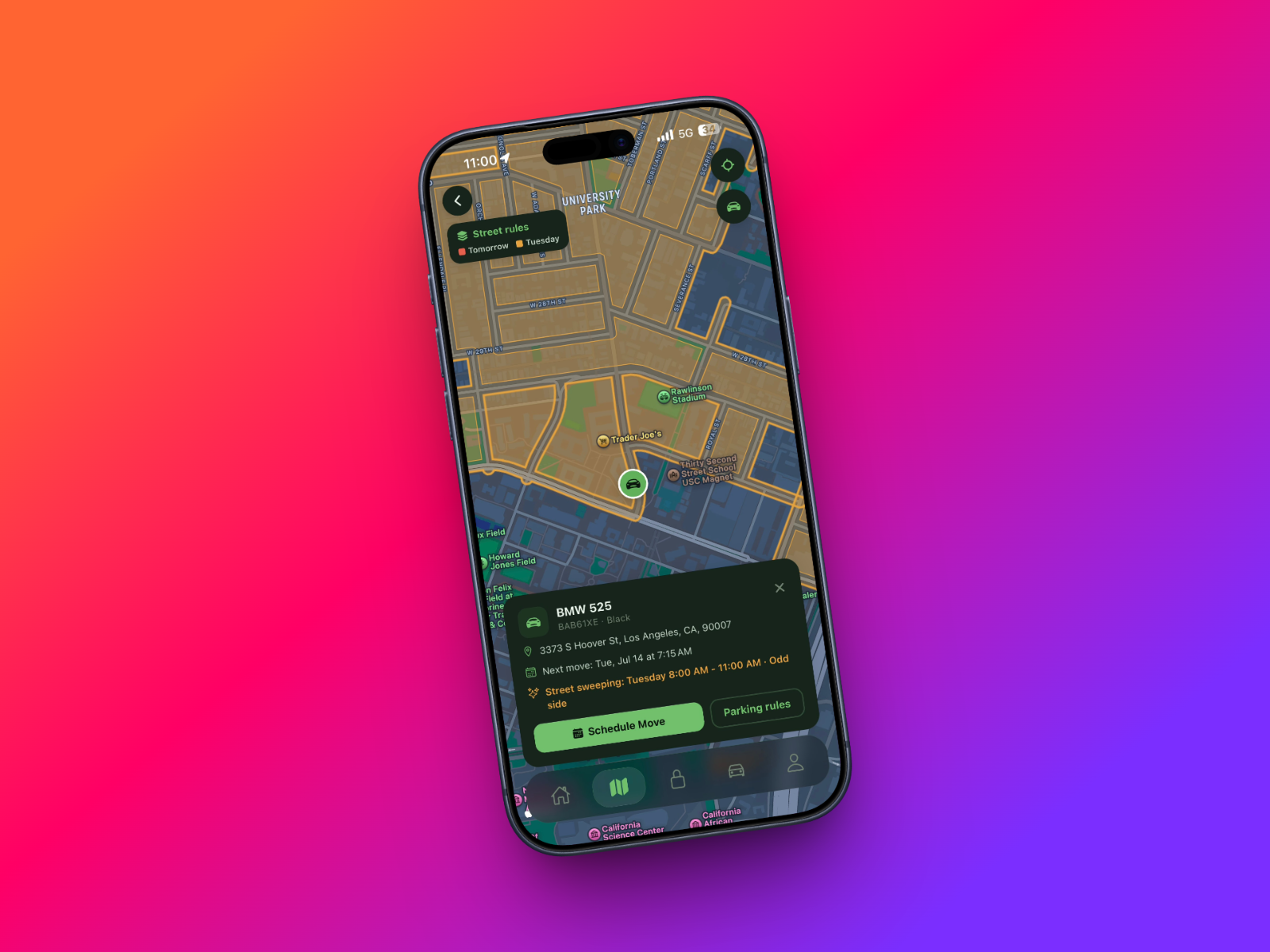
If you live downtown and rely on street parking, the recurring cost is street sweeping on your residential block — every week, on a schedule that rarely fits a work day that starts early or ends late. Curbswap handles exactly that: a vetted driver moves your car to a legal spot before the sweeping window begins and sends photo and GPS proof. Launching across LA neighborhood by neighborhood — join the waitlist for your block.
The event-night playbook
Game, concert, and convention nights are when DTLA parking goes from tricky to treacherous. A simple playbook keeps you out of trouble:
- Pre-book a structure. Reserve a spot near your venue ahead of time. You lock in a price, guarantee a space, and skip the surrounding streets entirely — where temporary restrictions and tow enforcement are heaviest on event nights.
- Assume the streets are tow-away. On a big event night, the residential and metered blocks around a venue often carry temporary "No Parking" signs that weren't there that morning. If you must street-park, read every sign and check the date and time window.
- Give yourself a buffer. Traffic and exit congestion around downtown venues are brutal. Arriving early for a cheaper, closer spot beats circling as the event starts.
- Note where you parked. Downtown's grid and one-way streets are disorienting after a three-hour event; a dropped pin saves you real time.
Daytime errands vs. living downtown
For a quick daytime errand, metered street parking is fine — just mind the time limit and steer clear of rush-hour corridors as the afternoon window approaches. Living downtown is a different calculation. Between rush-hour tow-away zones, late-enforced meters, event surges, and street sweeping on residential blocks, the cost and hassle of fighting for street space regularly outweigh a monthly structure spot for most residents. If you do rely on the curb, the recurring, schedulable restriction you can plan around is street sweeping — and it's the one a service like Curbswap can take off your plate entirely.