
You parked legally on Monday. By Wednesday morning your car is gone — and a laminated paper sign zip-tied to a nearby pole says "No Parking" for a film shoot you never heard about. Temporary "No Parking" signs are one of the most frustrating and expensive parking traps in Los Angeles, precisely because they appear on short notice on blocks that are normally fine. Here's how they work and how to avoid getting caught.
What temporary "No Parking" signs are
Temporary restrictions are posted for short-term needs that clear the curb for a specific window:
- Film and TV production. LA is a production town, and shoots regularly post temporary no-parking zones to stage trucks, trailers, and equipment.
- Construction and utility work. Building projects, street repairs, tree trimming, and utility crews post temporary restrictions to keep the work zone clear.
- Special events. Street fairs, races, parades, and large private events bring temporary closures.
- Moving and deliveries. Some temporary permits reserve curb space for moving trucks.
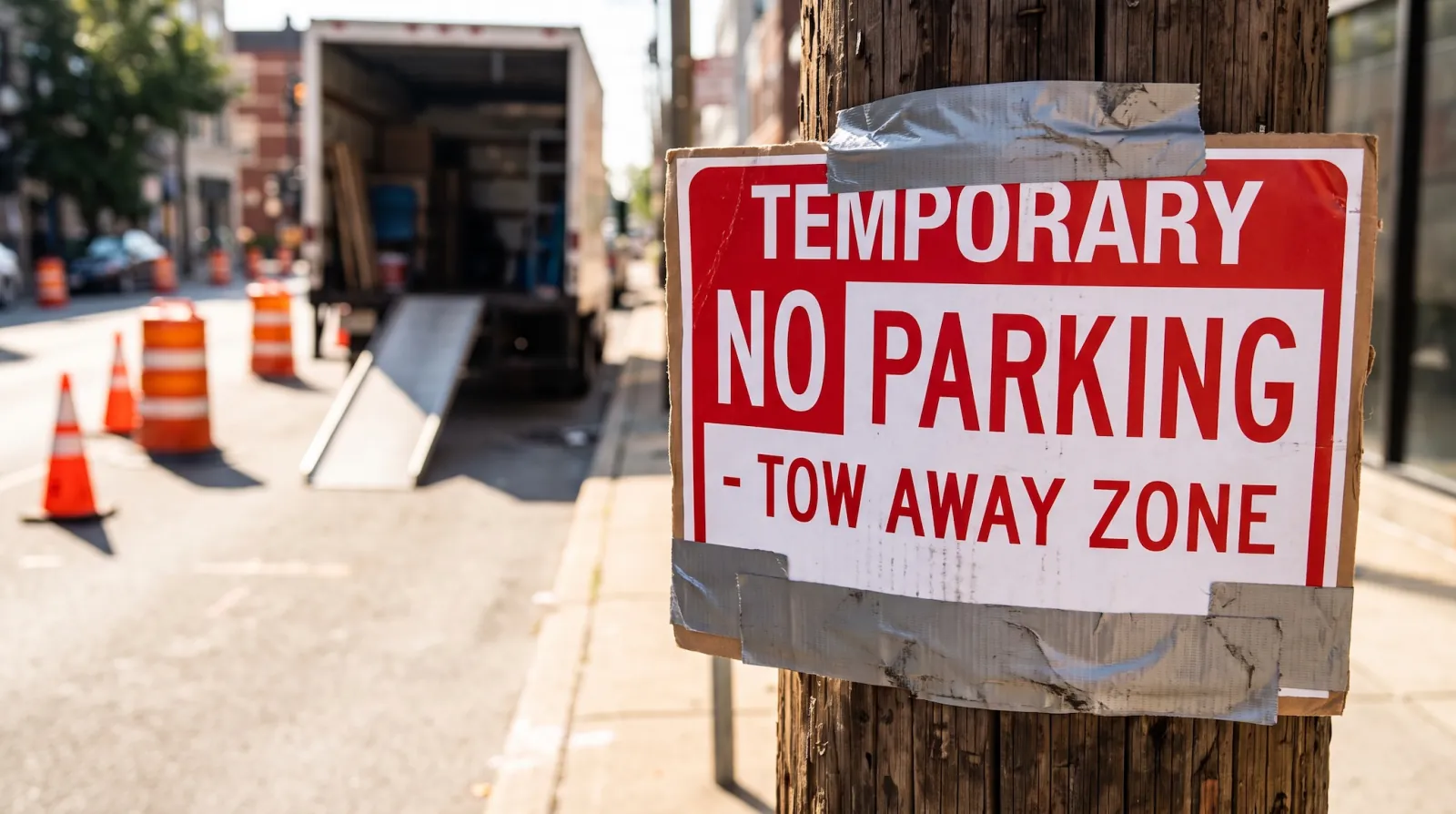
These aren't the permanent metal signs bolted to poles. They're usually printed or laminated paper notices posted on stakes, poles, or barricades, with a date range and time window.
Are they enforceable? Usually yes
Here's the part that surprises people: a properly posted temporary restriction is enforceable, and your car can be ticketed and towed even though the block is normally legal. Production and construction crews obtain permits from the city that authorize the temporary zone, and posting is typically required a set number of hours in advance (often around 24–72 hours) so residents have notice.
That advance-posting requirement is your one protection — and it's why the timing matters so much. If a sign goes up while your car is already parked and you don't walk past it, you'll never know until your car is gone.
Why they lead to tows, not just tickets
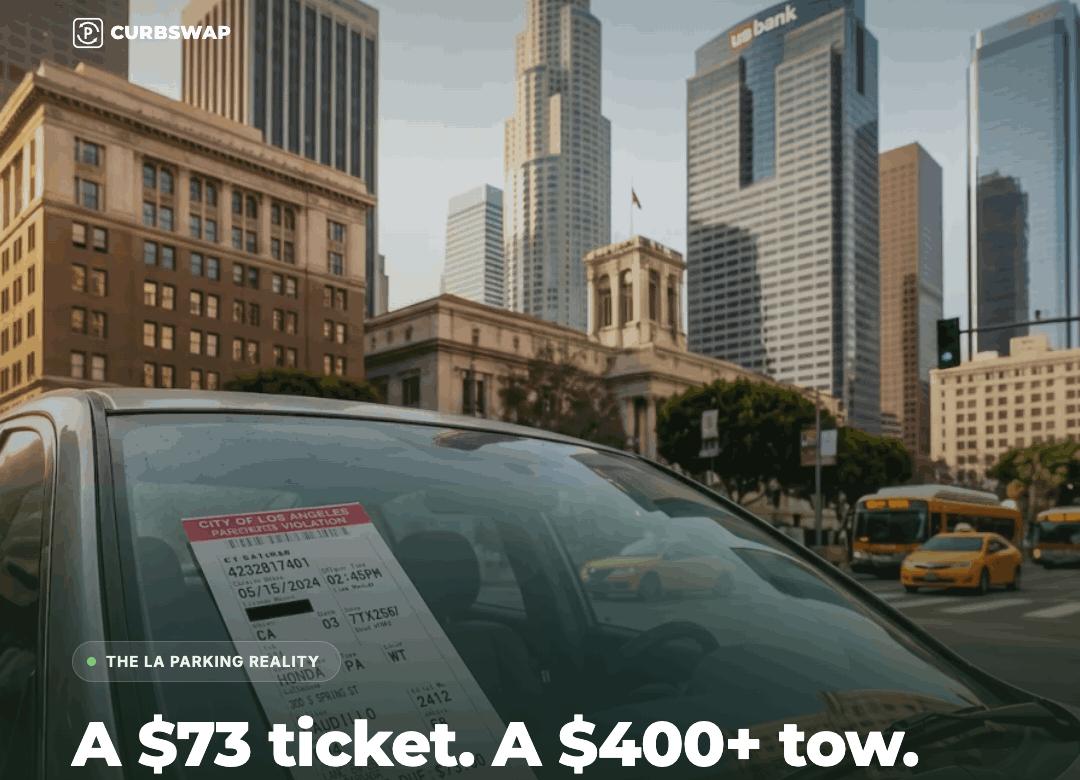
Temporary zones exist to clear the curb for something — a camera truck, a crane, a parade route. A ticket doesn't accomplish that; removing your car does. So temporary "No Parking" zones are frequently tow-enforced, which makes them one of the most expensive parking mistakes in the city. With 2026 impound rates, a tow runs $450–$600 or more once you add the tow fee, daily storage, and the release fee — plus the hassle of tracking down which lot has your car.
How to actually read a temporary sign
Not every temporary sign means your car has to move right now. The details matter:
- The date range. A sign posted today might reserve the curb for a shoot three days from now. Note the exact start date, not just the fact that a sign exists.
- The time window. Many temporary restrictions apply only during specific hours — for example, a construction zone active 7 AM to 5 PM but legal to park overnight. Read the hours before you assume you're blocked all day.
- The extent. Arrows or "this side only" language tell you which stretch of curb is affected. The restriction may cover only part of the block.
- The authority. Legitimate temporary restrictions reference a city permit. A handwritten "don't park here" note from a neighbor has no legal force — but a properly permitted and posted production or construction sign absolutely does.
Which neighborhoods see the most temporary zones
Temporary restrictions aren't evenly distributed. Film and TV production clusters in and around Hollywood, Silver Lake, Echo Park, Downtown, and the neighborhoods that double for "anywhere USA" on screen — if you live in a photogenic, production-friendly area, expect shoots regularly. Construction temporary zones follow development, so fast-growing corridors and blocks with active building projects see them constantly. Event closures concentrate around venues, parade routes, and festival footprints. Knowing your neighborhood's pattern helps you stay alert to the signs.
How to protect your car
- Walk past your car every day or two if it sits parked. This is the single best defense — temporary signs go up with only a day or two of notice.
- Read the full date range and window on any temporary sign near your car, not just the headline. A sign might restrict only certain hours on certain days.
- Photograph the sign (or its absence). If you're towed from a zone that wasn't posted with proper notice, that documentation matters when you contest it.
- Contest an improper tow. If a temporary restriction wasn't posted with the required advance notice, you may have grounds to dispute the citation and recover tow costs. Bring photos and be specific about timing.
- Move proactively when you see crews staging. Trucks, cones, or barricades appearing on your block are an early warning that signs are coming.
What temporary signs mean for residents
For most drivers, temporary restrictions are an occasional nuisance. For residents who leave a car parked in the same spot for days at a time — which is most people with street parking — they're a recurring tow risk that's almost impossible to fully track. You can't walk your block every few hours, and productions don't email you.
Where this fits with everyday parking
Temporary signs are the unpredictable layer on top of the predictable ones — street sweeping, permits, meters, rush-hour zones. You can plan around the predictable rules; the temporary ones require vigilance. Curbswap focuses on the recurring, schedulable restrictions like street sweeping, moving your car before each window with photo and GPS proof. For the unpredictable stuff, the best defense is still awareness: check your block, read the signs, and move early when crews show up. Curbswap is launching across Los Angeles neighborhood by neighborhood.