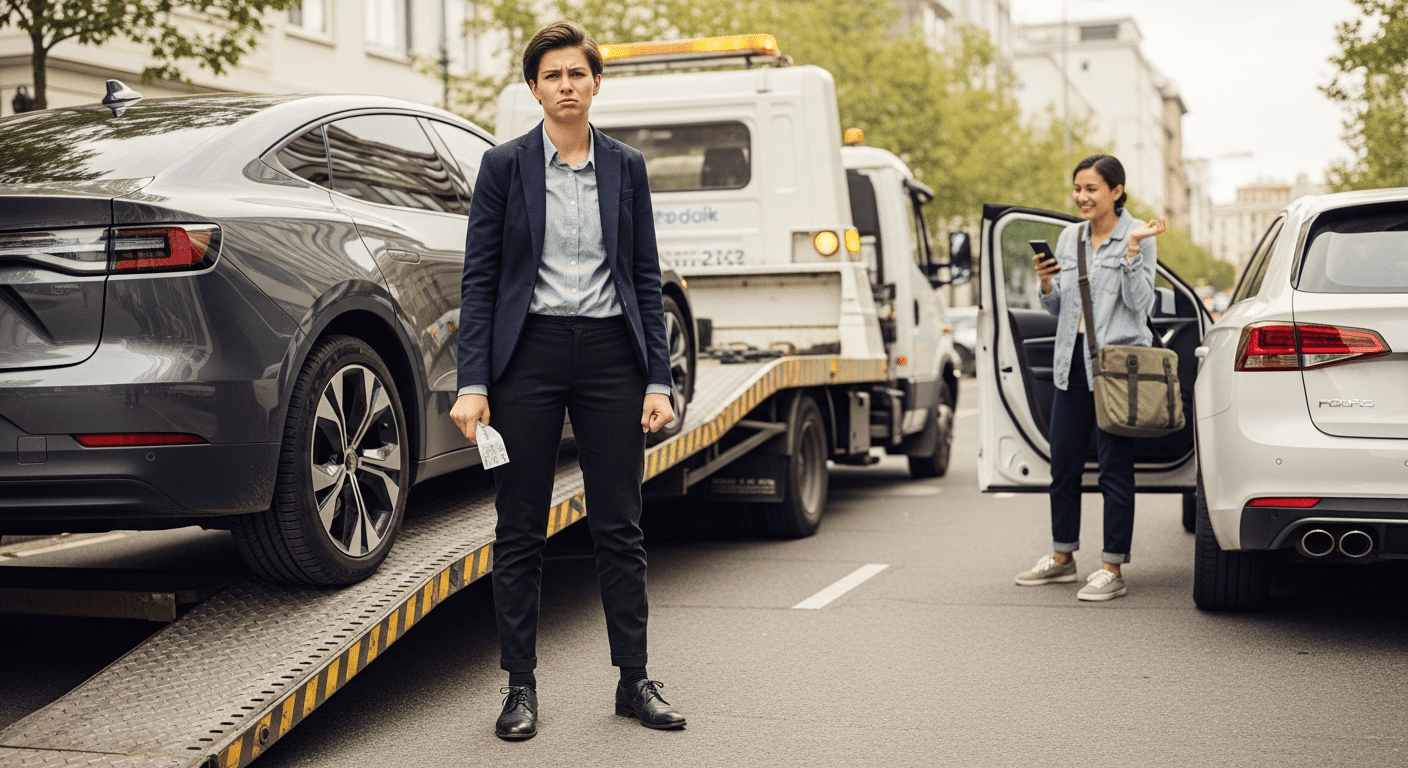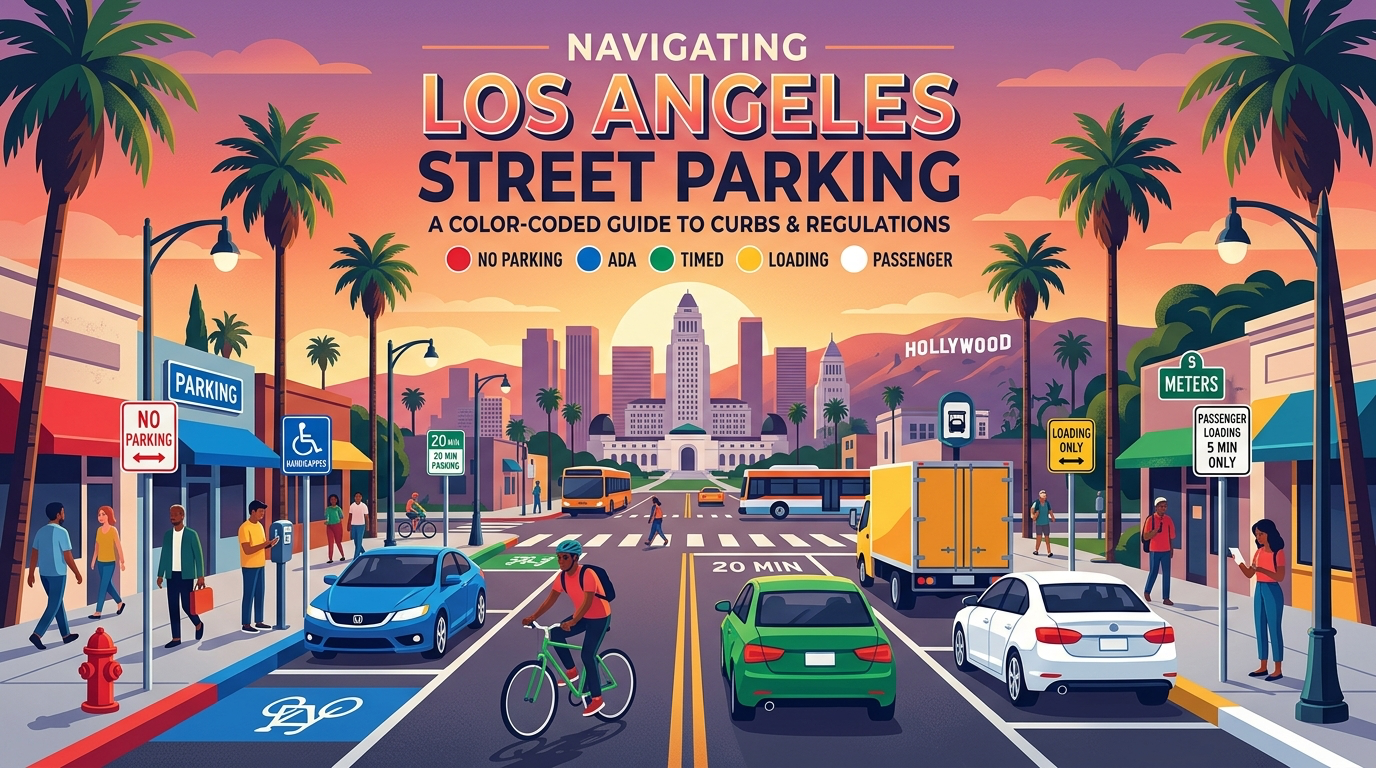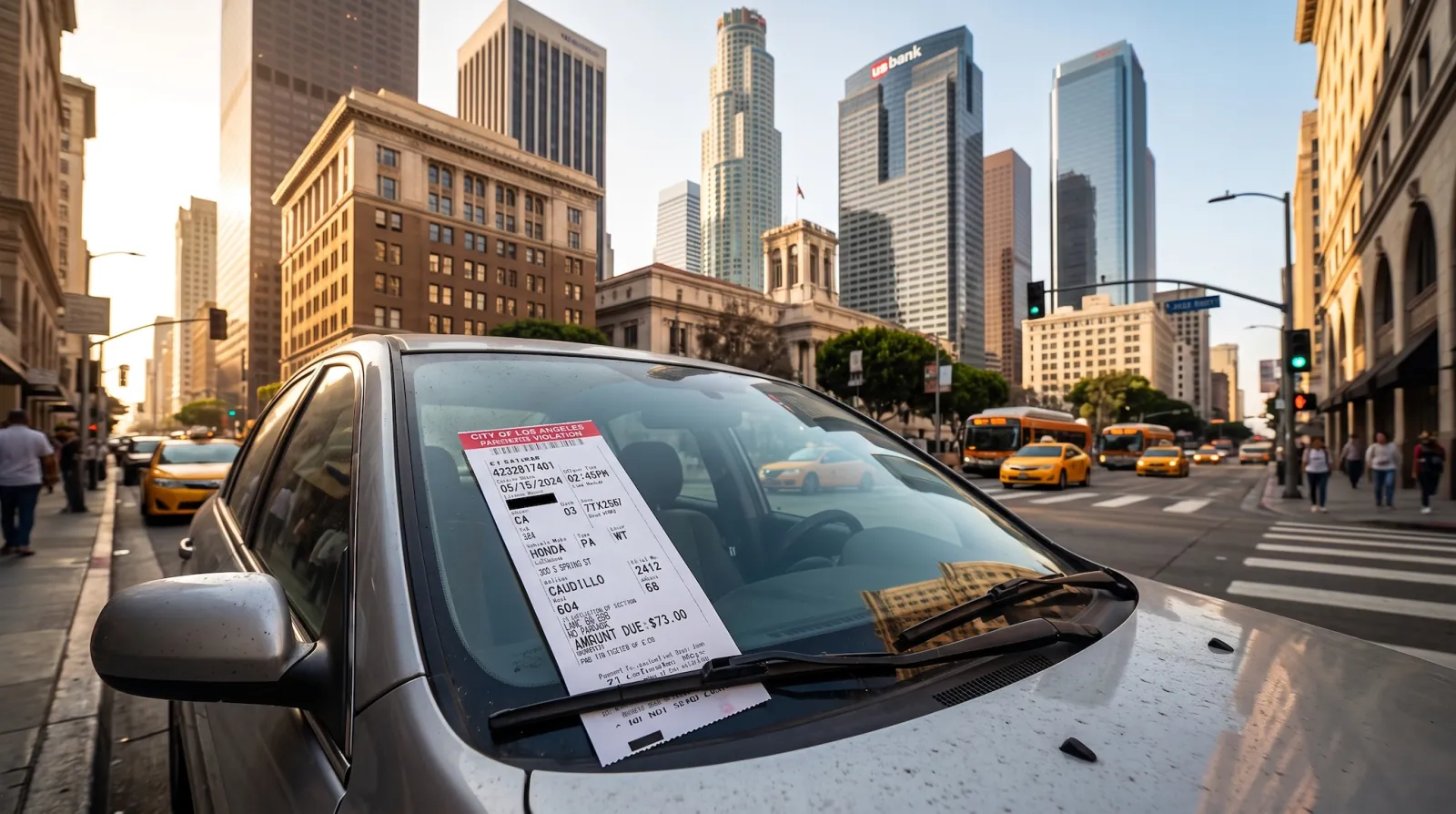

Few things ruin a day faster than walking to where you parked and finding an empty space. In Los Angeles, a tow isn't just inconvenient — it's one of the most expensive parking mistakes you can make. Here's why cars get towed, what it costs to get yours back, and how to make sure it never happens again.
Why cars get towed in Los Angeles
Most tows come down to a handful of situations:
- Rush-hour tow-away zones. Many major corridors ban parking during morning and evening rush hours. Park at 3:59 PM and you're fine; at 4:01 PM your car can be hooked.
- Street sweeping on tow-enforced blocks. On some blocks, blocking the sweeper doesn't just earn a ticket — it earns a tow.
- Temporary "No Parking" signs. Film shoots, construction, and utility work post short-notice restrictions. A legal spot yesterday can be a tow-away zone today.
- Expired registration or too many unpaid tickets. The city can tow and impound vehicles with long-expired tags or a stack of unpaid citations.
- Blocking a driveway, hydrant, or red zone. Safety violations are towed aggressively.
What it costs to get your car back
This is where a tow separates itself from an ordinary ticket. As of the January 2026 rate increase, a typical LA impound bill stacks several charges:
- ~$220 tow fee (first hour)
- ~$68 per day storage (plus a 10% city parking tax)
- $115 vehicle release fee
- The original citation that caused the tow
Drivers routinely pay $450–$600 before they can leave the lot — and every extra day the car sits adds more storage. For a lot of people, that's a genuinely destabilizing expense.
How to get your car back — step by step
- Find out who towed it. Call the LAPD non-emergency line or use the city's vehicle-locator tools to confirm the car was towed (not stolen) and which lot has it.
- Gather your documents. You'll typically need your driver's license, proof of registration, and proof of insurance. If the car isn't in your name, bring authorization.
- Get a release if required. Some tows require a police-issued release before the lot will hand over the car.
- Pay the fees. Bring a payment method the lot accepts — fees climb daily, so go quickly.
- Inspect the car before you leave for any damage from the tow.
How to avoid a tow entirely
Tows are almost always the escalation of a smaller problem you didn't catch in time:
- Know your rush-hour zones and never cut the window close.
- Check for temporary signs any time you leave a car parked more than a day.
- Keep registration current and don't let citations pile up.
- Stay ahead of street sweeping — the most predictable tow trigger of all.
That last one is where Curbswap comes in. A vetted driver relocates your parked car to a legal spot before street sweeping and restricted-parking windows begin, with photo and GPS proof. Because avoiding one tow can cost more than several months of service, it pays for itself fast — and you never open your curbside app to an empty space again.