ExplainerNovember 3, 20264 min readBy Curbswap Team
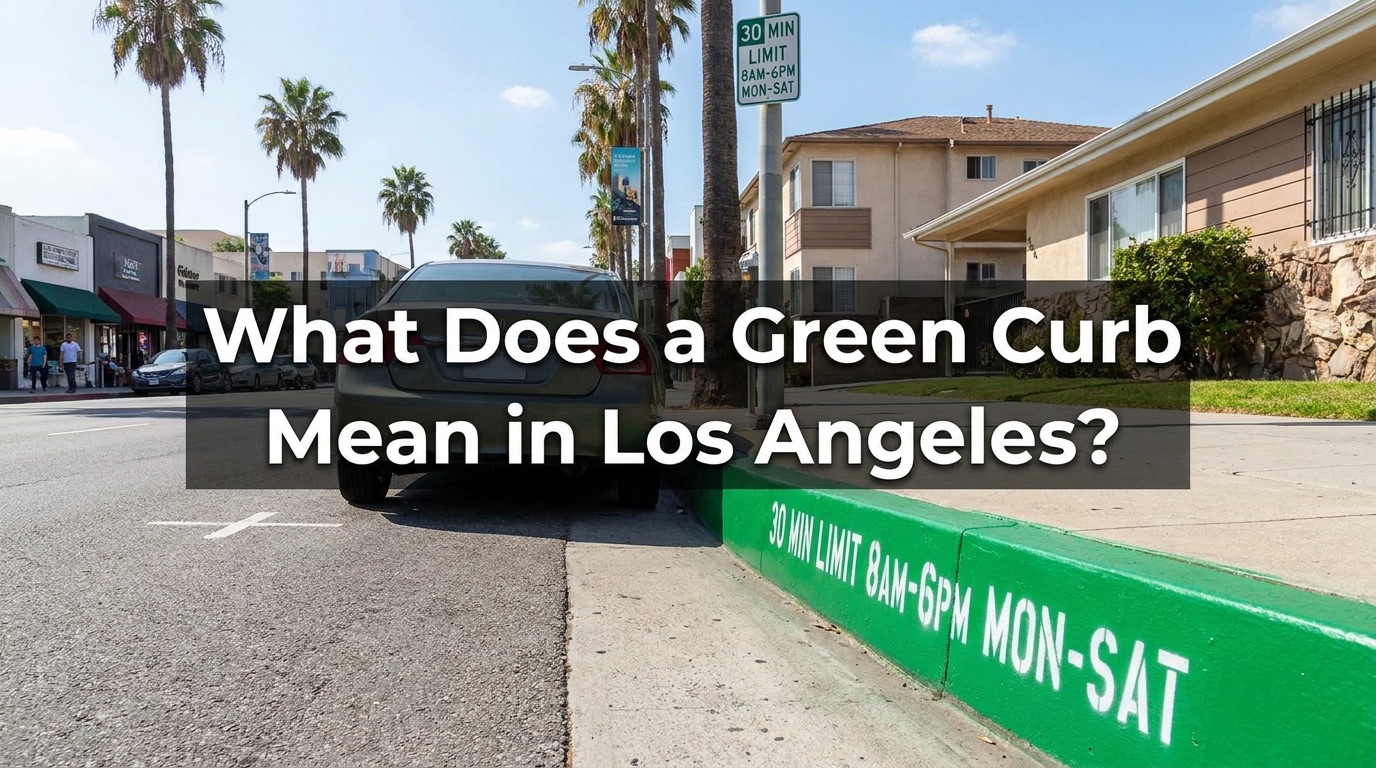
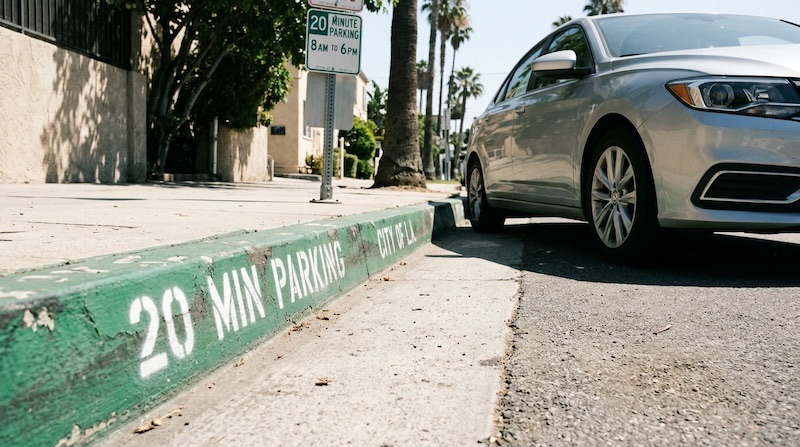
A green curb in Los Angeles means you can park there, but only for a limited window — not indefinitely, and not for however long a meter or sign elsewhere on the block might suggest. The exact time limit is set at that specific curb, not citywide, so the number that matters is whatever's painted or posted right where you're parking.
Where the rule comes from
Curb colors are defined statewide by California Vehicle Code Section 21458: green means limited-time parking, full stop. The state doesn't set the number of minutes — that's left to the city. LADOT and local ordinance fill in the specific limit and post it at the curb or on a nearby sign. That's a two-layer system, and it's why a green curb outside a gym might allow 30 minutes while one two blocks away allows 90. The color tells you the rule exists; it doesn't tell you the number.
How long you can actually stay
There's no single citywide default to memorize. Green zones in LA are commonly stenciled or signed for 15-minute or 30-minute limits, but that's a pattern, not a guarantee — some run longer. The only way to know the real number at a specific spot is to look at the curb itself or the sign next to it. If you can't find a number, don't assume a long window; treat it the way you'd treat any unlabeled restriction and park somewhere you can verify instead.
The clock starts when you park, not when you notice the color. Moving your car a few feet down the same green zone and parking again doesn't reset it — enforcement looks at whether the vehicle has been in that zone longer than the posted limit, not whether it moved six feet.
When the limit doesn't apply
Colored curb zones generally run on a posted schedule rather than enforcing around the clock. A common pattern for short-term zones like these is enforcement Monday through Saturday, roughly 8 a.m. to 6 p.m., unless the sign at that specific curb says something different. Outside the posted hours — and on Sundays, unless a sign states otherwise — the time limit typically doesn't apply. That's a general pattern, not a promise for every block: a nonstandard sign at your exact spot overrides it, so check before you rely on it, especially somewhere unfamiliar.
The placard exception
A vehicle displaying a valid disabled person placard or plate is exempt from the posted time limit at a green curb. The placard has to be currently valid and visibly displayed — not sitting in the glovebox — for the exemption to hold up. Without it, the time limit applies the same way it would to anyone else.
What a green curb is not
It's easy to lump every color together, but green has nothing to do with the other common curb markings:
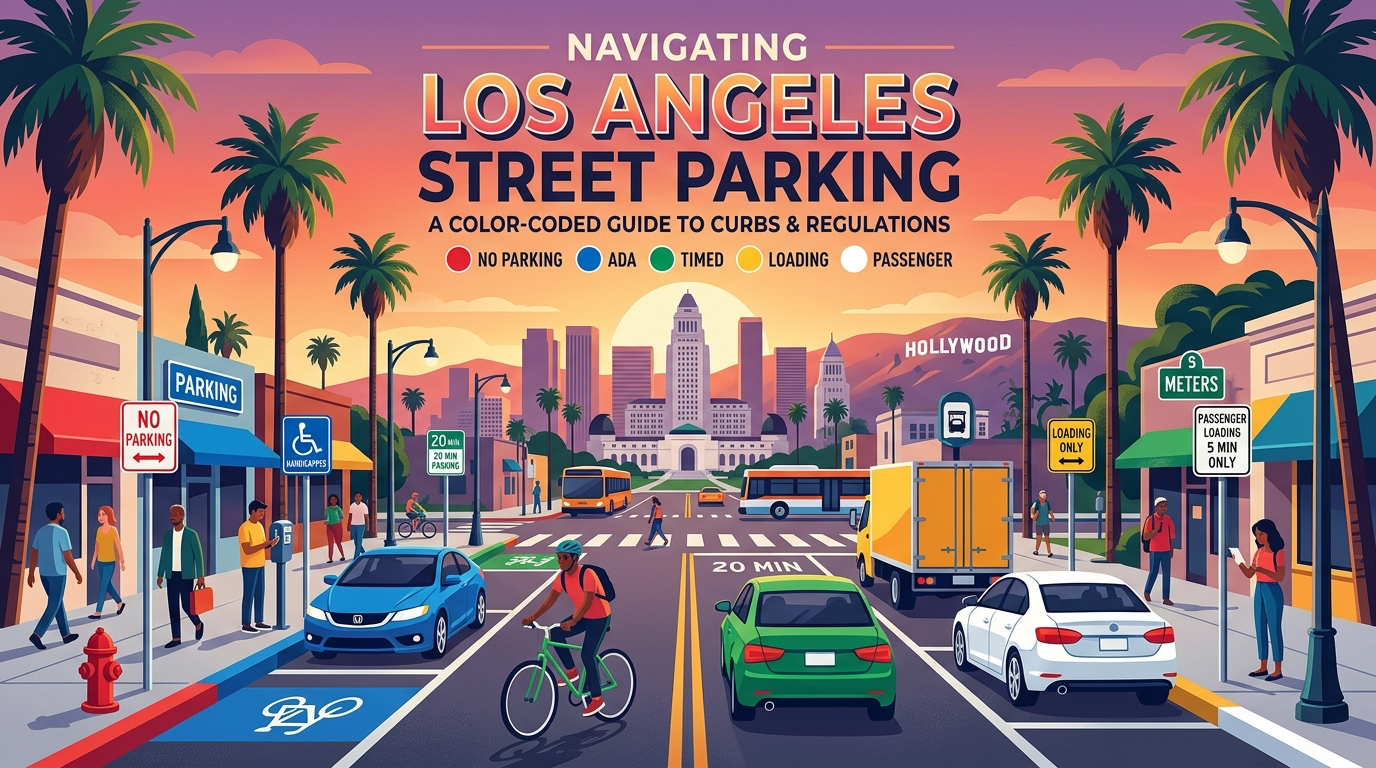
It's not a loading zone. That's yellow, and it's commercial-only on its own posted hours.
It's not disabled-only parking. That's blue, and unlike green, it isn't a time limit — it's a placard requirement, enforced around the clock.
It's not a no-stopping zone. That's red, where you can't even pause to drop someone off.
It's not street sweeping. Street sweeping is its own system entirely, usually marked with a plain gray curb and a separate sign giving a day and a window, with no color involved at all. A curb can be green and still carry its own sweeping restriction on top of the time limit — the two rules don't cancel each other out, and you have to check both.
The mistakes that actually cost people
Assuming green means "fine, park and forget it." It means fine for a specific number of minutes, which you still have to find and respect.
Guessing the limit instead of reading it. The number varies block to block. If you can't find it posted, don't guess long.
Forgetting the placard has to be displayed, not just owned. An expired or stashed-away placard doesn't exempt anything.
Checking the curb color and stopping there. A green curb can still have a street-sweeping sign on the same pole. Read both before you walk away.
If you're not sure what a specific green curb allows, the safest move is the boring one: find the posted number before you park, not after you've already gotten a citation. Green and red are opposites in how forgiving they are — red has zero tolerance, green has some, but "some" still has a number attached to it.
None of this touches the ticket LA actually hands out the most. Street sweeping — a different system, with its own posted day and time, no curb color required — is responsible for the bulk of citations in the city, and a green curb reading has nothing to do with whether your block sweeps on Tuesday. That's the specific, recurring problem Curbswap solves: a vetted driver relocates your car to a legal spot before your street's sweeping window opens, documented with photos and GPS, so you're not the one keeping track. Curbswap is rolling out across Los Angeles neighborhood by neighborhood.
green curbcolored curb zonesparking rules los angelesavoid parking tickets
Never get a parking ticket again.
Curbswap moves your car before street sweeping hits — hands-off, with photo + GPS proof. The app is live: check your street’s rules for free.