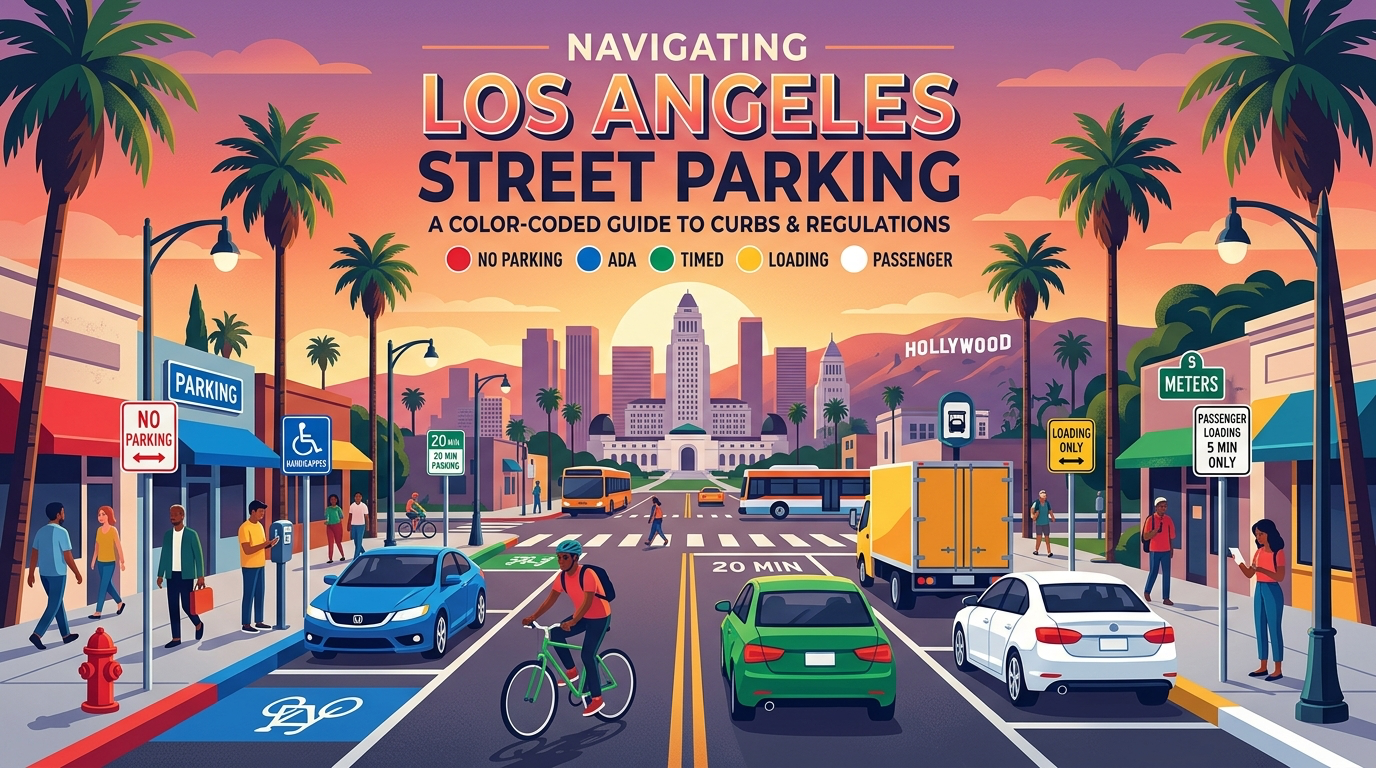
Five colors, five rules. Red means no stopping or parking, ever, no exceptions for a quick errand. Yellow is commercial loading only, with hours set locally. White is a short passenger drop-off or pickup, also on local hours. Green is time-limited parking, with the limit posted at the curb. Blue is reserved for vehicles with a valid disabled placard or plate. Get the color right and you're fine. Guess and you're not.
Where these rules actually come from
Curb colors aren't an LA invention — they're set statewide by California Vehicle Code Section 21458. The state defines what each color means; the city then sets the specific hours and time limits on top of that framework through local ordinance, and LADOT enforces it. That two-layer system is exactly why a green curb near your gym might allow 90 minutes while one across town allows 30 — the color is universal, the fine print is local.
The five colors
- Red — no stopping, standing, or parking. This applies 24/7 regardless of meters, permits, or the time of day. The only routine exception is a bus stopping in a marked bus zone. Don't treat a red curb as "just no parking" — you can't even stop to drop someone off.
- Yellow — commercial loading zone. Meant for freight and passenger loading during hours set by the city, typically posted on the curb or a nearby sign. Outside those hours, yellow curbs often open up to general parking — but confirm the posted hours rather than assuming.
- White — brief passenger loading. Common outside hotels, restaurants, and busy storefronts. It's built for a few minutes of pickup or drop-off, not for running an errand. Walk away from the car and you're exposed.
- Green — time-limited parking. You can park here, but only for the window painted or posted at that specific curb — it might be 20 minutes, it might be two hours. There's no citywide default; read the curb.
- Blue — disabled parking only. Requires a valid disabled person placard or plate. Enforcement here tends to be strict and the citations aren't cheap, so this isn't a color to guess on.
The mistakes that actually cost people money
- Assuming the meter overrides the curb. A red curb with an inactive meter is still a red curb. The color controls, not the meter.
- Treating yellow like general parking. Yellow is for loading, on a schedule. Sitting there while you run into a store is a common, avoidable ticket.
- Not checking the actual time limit on green curbs. People see "green means okay" and stop reading. The limit is what makes it legal, and it varies block to block.
- Parking blue without a valid placard displayed correctly. A placard in the glovebox doesn't count. It has to be visibly hung and currently valid.
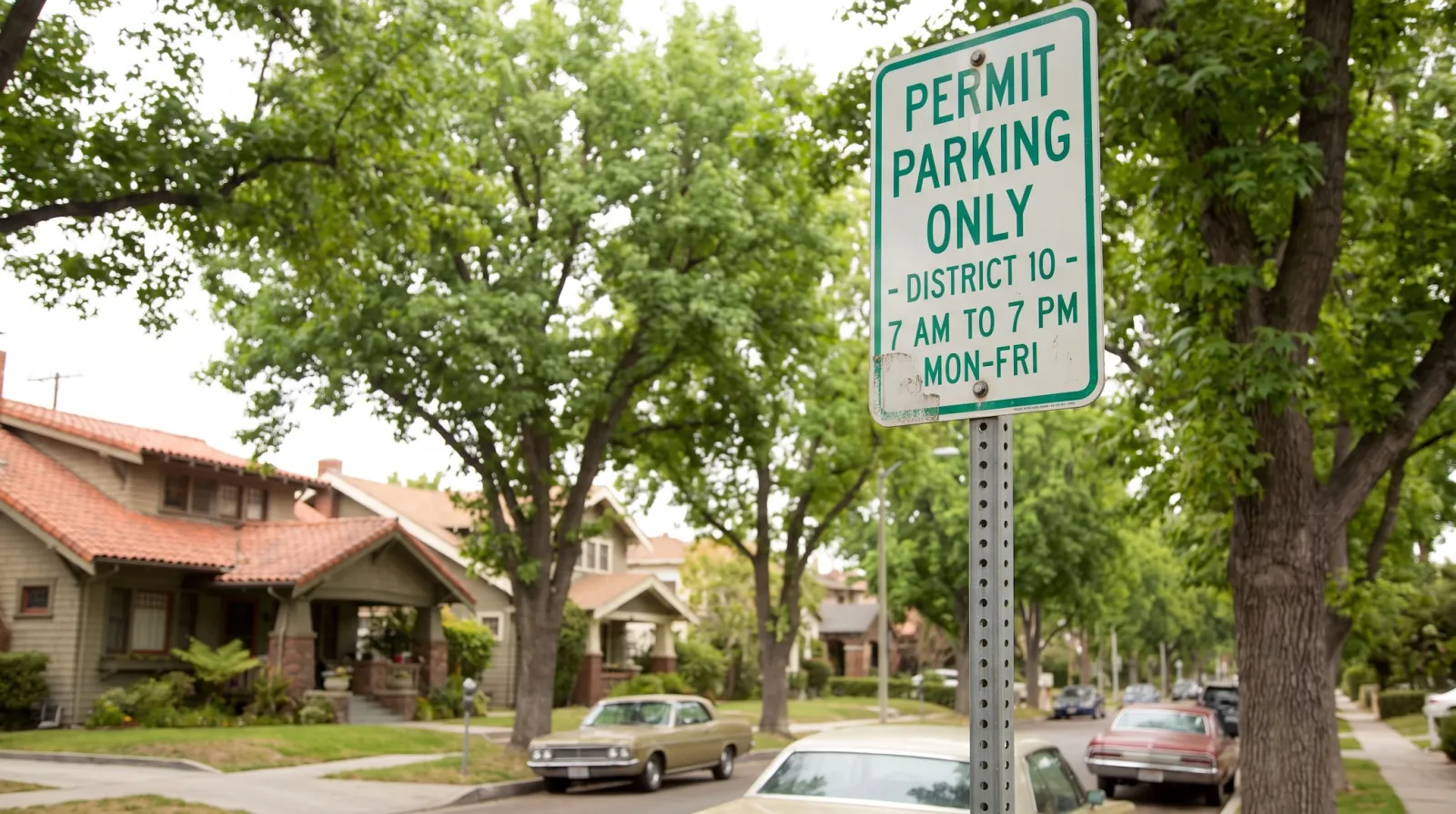
- Confusing a curb color with a street-sweeping restriction. These are two completely different systems. A curb can be uncolored — no red, yellow, white, green, or blue — and still carry a posted street-sweeping sign with its own day and time window. Curb color and sweeping schedule don't talk to each other; you have to check both.
What happens if you get it wrong
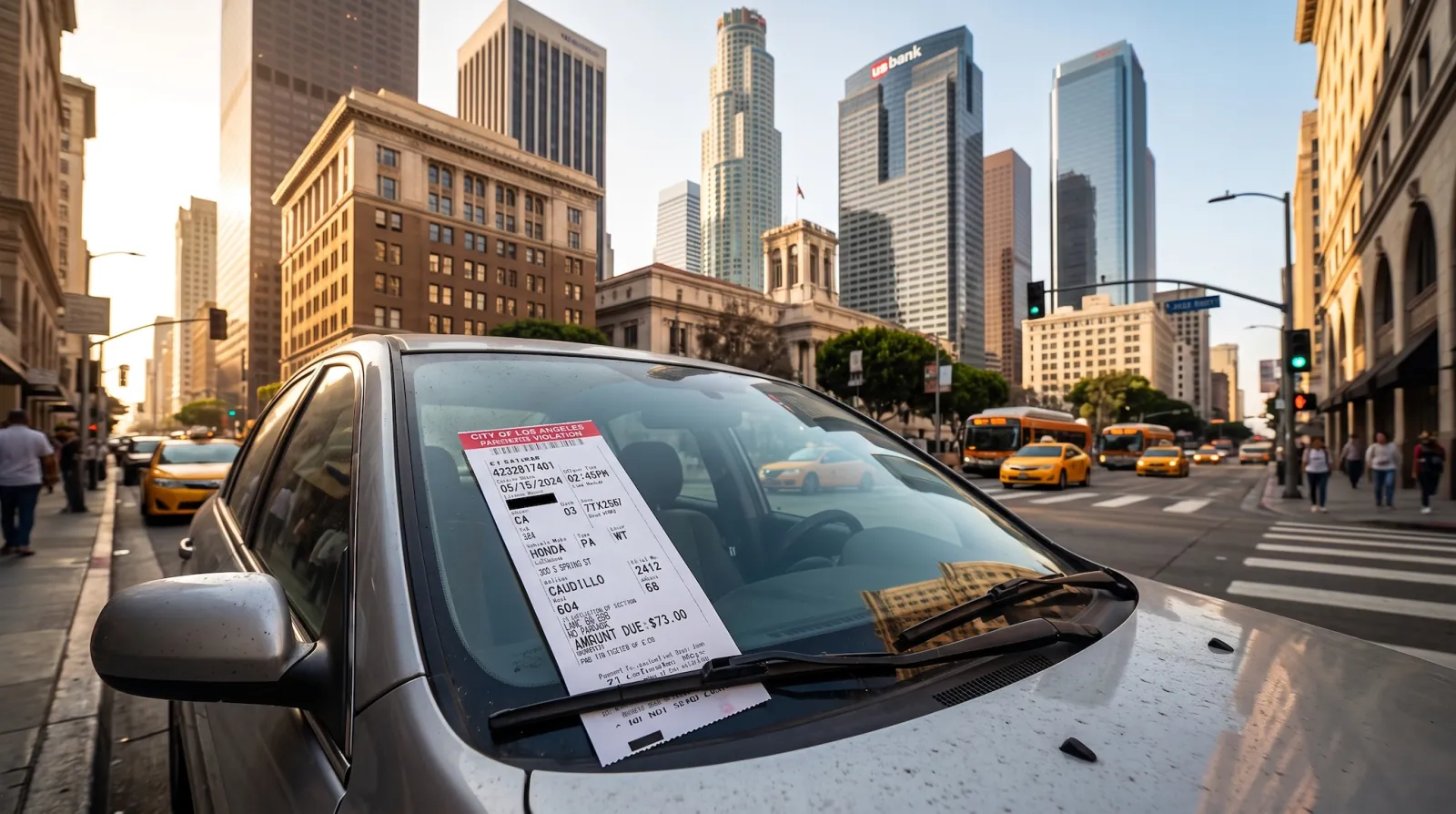
Outcomes vary by violation, but the two realistic downsides are a citation or a tow. Red-curb and blue-curb violations in particular are the kind of thing enforcement treats seriously, and if your car is towed rather than just ticketed, that's on top of a citation — LA-area impounds commonly run $400+ once you add tow and storage fees. The cheaper habit is reading the curb before you park, not disputing after.
A quick way to check before you park
If you're not sure what a curb color allows, look for a small sign or stenciled text near the curb — cities are required to post the specific hours or time limit somewhere close by, since the color alone doesn't carry the fine print. When in doubt, especially with red or blue, don't park and figure it out later. Those are the two colors with the least tolerance for a guess.
None of this touches street sweeping
Here's the part that trips up even careful drivers: knowing your curb colors cold does nothing for the most common ticket in the city. Street sweeping runs on its own posted schedule — a plain gray curb with a sign, no color at all — and it's responsible for a huge share of LA's parking citations. You can ace every colored curb on your block and still get hit because you forgot Tuesday is sweep day. That's the specific, recurring problem Curbswap solves: a vetted driver relocates your car to a legal spot before the sweeping window opens, with photo and GPS proof, so you never have to remember. Curbswap is rolling out across Los Angeles neighborhood by neighborhood.