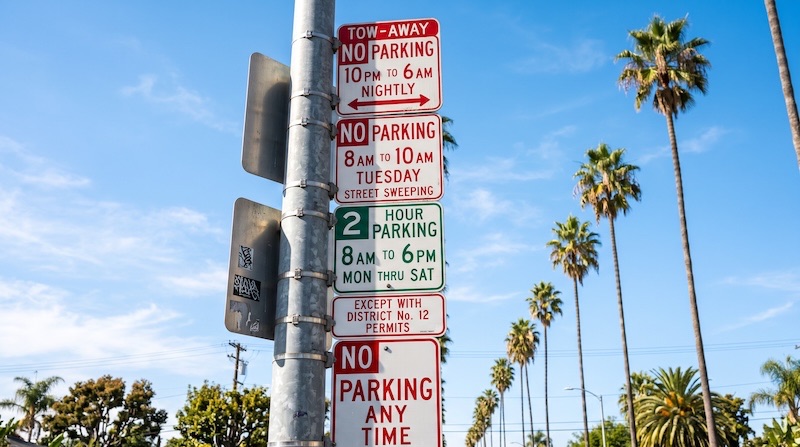
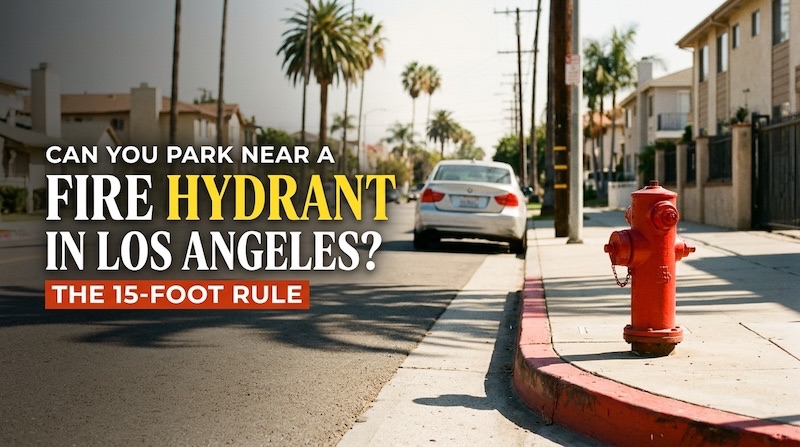
Start at the top of the pole and read down. Every sign on it is active at some point, and the one that applies to your exact day and time might be the third one down, not the biggest one. Arrows tell you which stretch of curb a sign covers. A single arrow pointing one direction means the rule applies to that side of the sign only, up to the next sign or corner. Two arrows, or no arrow at all, generally mean the rule covers both directions from where the sign is posted. Get the arrow wrong and you can be parked legally ten feet from where the restriction actually starts — or ten feet into it.
Time-limit signs read left to right
A sign that says "2 HR PARKING 8 AM–6 PM" is really two separate facts stacked together: the maximum stay (2 hours) and the window that limit is enforced (8 AM to 6 PM). Outside that window, the time limit usually doesn't apply at all — you can park there overnight without a parking-disk clock running. Inside the window, the clock starts the moment you park, and it resets only once the car actually leaves the space. Moving your car to the next spot over, or circling the block, is a common move but not a reliably safe one — enforcement in some zones specifically tracks chalk marks or tire position, so don't treat moving a few feet as guaranteed cover.
"Except by permit" does not mean you
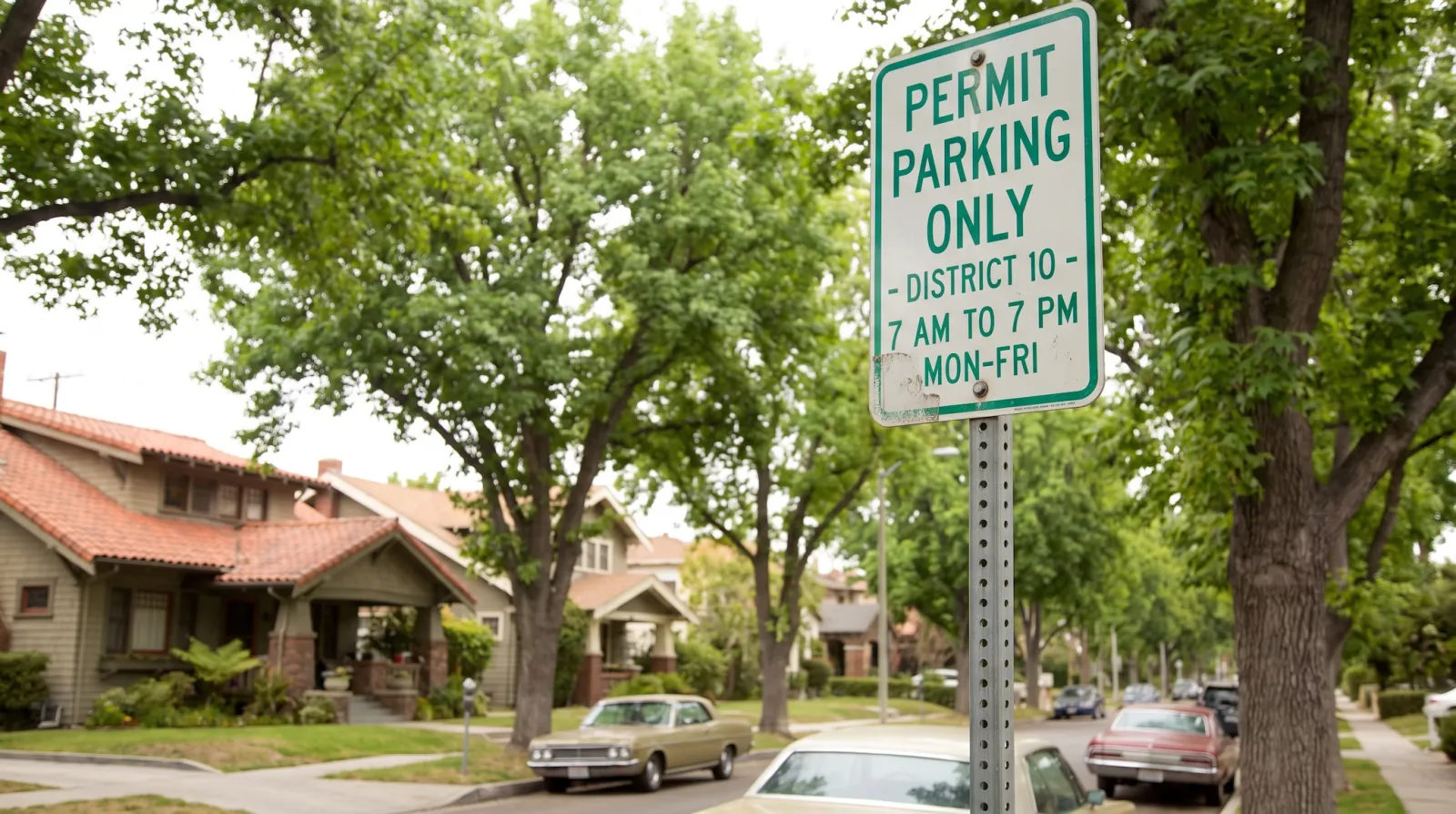
This is the single most misread phrase on an LA sign. "2 HR PARKING EXCEPT BY PERMIT" means permit holders are exempt from the two-hour limit — it does not extend your two hours, and it does not mean the zone is permit-only. If you don't hold the specific permit named or numbered on the sign, treat the base restriction as if the permit language weren't there. The opposite phrasing, "PERMIT PARKING ONLY," is the one that actually locks non-permit holders out entirely, usually with specific hours attached.
When one pole has three or four signs
Stacked signs are normal in LA, and they don't cancel each other out — they layer. A pole might carry a street-sweeping restriction, a residential-permit exemption, and a rush-hour tow-away notice all at once, each covering a different slice of the day. The sweeping sign might only matter Tuesday morning; the tow-away sign might only matter weekday rush hour; the permit sign covers everything in between. Read every sign on the pole, not just the first one you see, and check which one actually governs the specific hour you're parking.
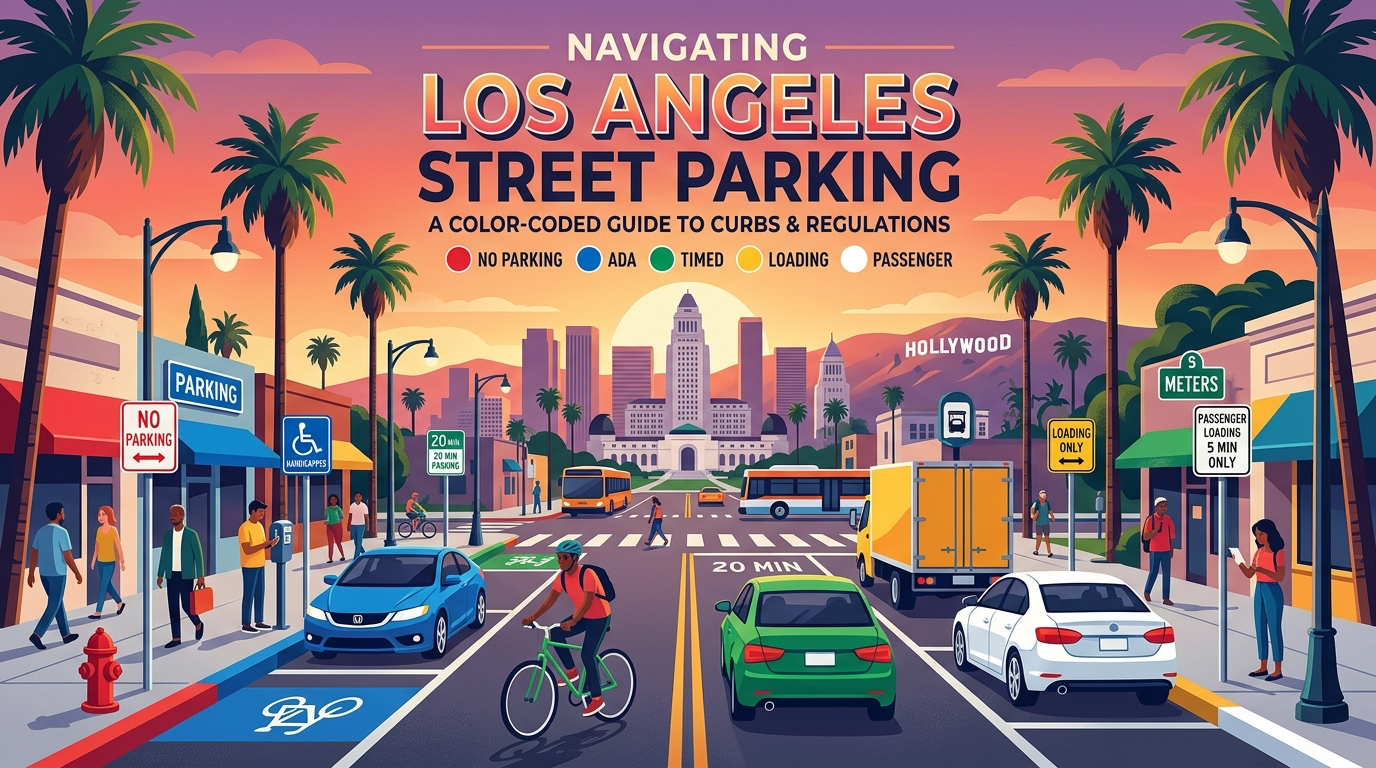
Signs decide, curb paint confirms
A colored curb and a sign aren't two competing sources of truth — the sign is the instruction, and curb paint is usually just reinforcement of it, though it has its own separate, state-defined meaning that doesn't require a sign at all (see our breakdown of what each curb color means). If a block has no colored curb at all, that tells you nothing — a plain gray curb can still carry a fully enforceable posted sign.
Permanent signs vs. the paper ones
Everything above applies to the standard metal signs bolted to a pole — the ones that are part of the block's permanent rules. Those are different from the laminated paper notices that show up overnight for a film shoot, construction job, or event. Those temporary signs follow their own posting rules and are usually tow-enforced; we cover how to read those separately in LA's temporary no-parking signs.
If you're still not sure, don't guess
LADOT maintains the actual restriction data for specific blocks, and it's the source to check when a sign is faded, confusing, or missing entirely — guessing and hoping is how a legal-looking spot turns into a $73 street-sweeping ticket or worse. If a sign has clearly fallen down, been painted over, or never existed where the rule applies, that's also grounds to contest a citation later — but you need a photo taken before the ticket to make that case.
A confusing sign is also exactly the moment Curbswap's CurbScout feature is built for: photograph the sign and it decodes it for you, free, with no account needed. It's part of the same free side of the app that includes the street-sweeping lookup and sweep-zone map — none of it requires a subscription. The paid side of Curbswap, a vetted driver who relocates your car ahead of a sweep with photo and GPS proof, exists for the restriction you can't just read your way out of: the recurring one on a schedule you're bound to forget eventually.
Never get a parking ticket again.
Curbswap moves your car before street sweeping hits — hands-off, with photo + GPS proof. The app is live: check your street’s rules for free.