ExplainerOctober 18, 20264 min readBy Curbswap Team
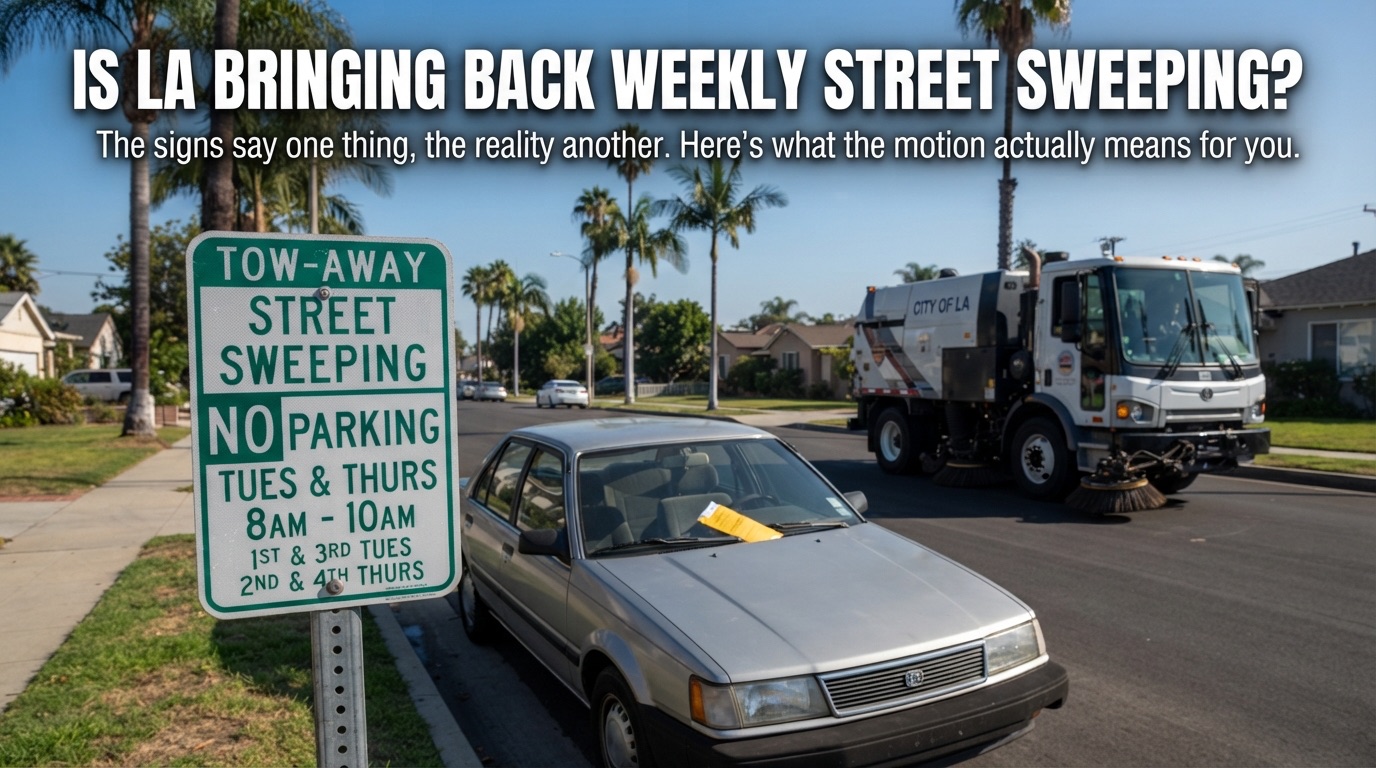
Short answer: not yet. On September 30, 2026, the LA City Council unanimously passed a motion ordering city departments to calculate the budget, staffing, and equipment it would take to bring back weekly street sweeping citywide, according to reporting by the Korea Daily. That's a cost study, not a start date. Nothing on your block's sign has changed. Check your current schedule before you assume otherwise.
Why this is even on the table
Los Angeles swept residential streets weekly for years. In 2021, the city cut most routes to every other week, citing pandemic-era budget and staffing reductions. The every-other-week pattern is still what's posted on most residential signs today — first and third weeks of the month, or second and fourth, depending on your route.
The cut saved money, but it created a side effect nobody loves: the signs still say "street sweeping," enforcement still runs on the posted hours, and a driver who doesn't know which week is theirs can get cited on a day the sweeper was never scheduled to show up. Reporting on the motion cites LADOT figures putting the wrongful-citation count at more than 12,500 since 2021, worth close to $1 million in fines. Whether or not that number holds up in full, it's clearly part of why the council acted now.
What the motion actually does
According to that same reporting, the September 30 motion bundles a few things together:
A citywide cost study — departments are directed to price out what weekly sweeping would take in budget, personnel, and equipment before anything is funded or scheduled.
A 15-day refund procedure for citations issued in error, aimed at drivers ticketed on days their block wasn't actually scheduled for sweeping.
Text and multilingual sweeping alerts, explored as a city-run notification option.
License-plate readers mounted on sweepers themselves, intended to tie enforcement more tightly to where a sweeper actually ran that day.
All four are directions for staff to study and report back on, not programs that exist yet. Treat this as the city formally asking "what would it cost to fix this," not an announcement that it's fixed.
What doesn't change this week
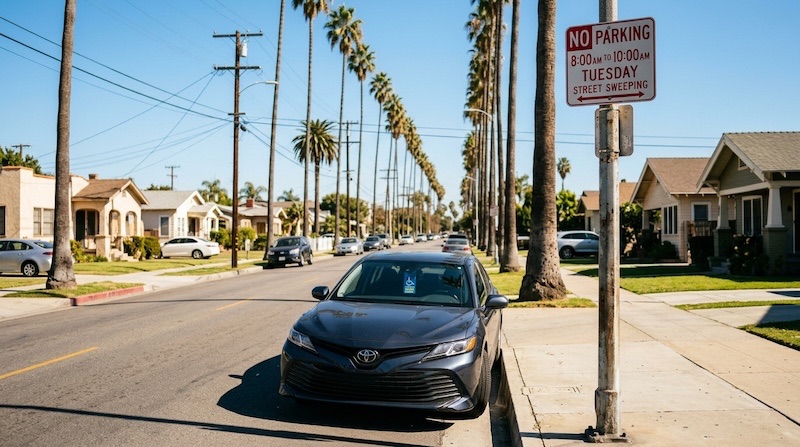
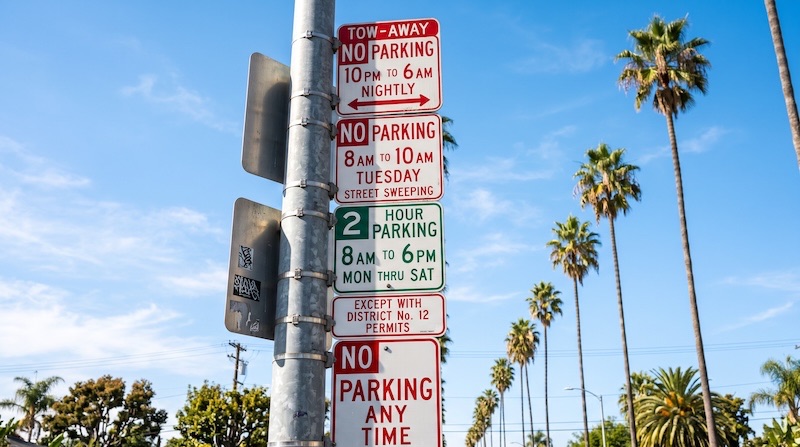
If your street is on a biweekly route, it is still biweekly. The posted sign on your block is still the rule that gets enforced, the same way it's always worked: the window on the sign is what matters, not whether the sweeper truck actually shows. A ticket is still $73, and if your block is tow-enforced, a tow still runs $400 or more once fees stack up. None of that moves until — and unless — the city actually funds and schedules a change, which a cost study alone does not do.
What would actually change if it goes through
If Los Angeles does restore weekly sweeping citywide, the practical effect for most residents is simple: twice as many sweep mornings a month instead of one. That's twice the opportunities to forget, twice the mornings you need to be up and moving the car before the window opens, and — if the pattern holds — a meaningful jump in the city's single largest ticket category. Street sweeping is already the most common parking citation in LA; doubling the frequency without doubling anyone's memory for it doesn't end well for the average driver.
The flip side is the enforcement-accuracy pieces. Plate readers on sweepers and real-time alerts, if actually built, would in theory cut down on the exact problem that got this motion filed in the first place — tickets written for routes the sweeper skipped or that were never scheduled that day. That's a genuine upside, if it ships as described.
How to actually track this
There's no credible timeline yet for when — or whether — a schedule change takes effect; a cost study has to come back to the council before any funding decision gets made. The reliable way to know if your own block has changed is the same as always: read the sign. A schedule change requires new signage, so a route that flips from biweekly to weekly will have a different posted pattern, not a silent change enforcement just starts applying. Spot-checking LADOT's sweeping schedule periodically is a reasonable habit regardless of how this plays out — cheaper than finding out from a citation.
The bottom line
For now: nothing has changed. The city is pricing out whether to double sweeping frequency and whether to modernize how it enforces that schedule, but a vote to study a cost is not the same as a vote to fund one. Keep reading your actual posted sign, and don't plan around a schedule the city hasn't shipped yet.
If and when LA does go back to weekly, the math on forgetting gets worse twice as fast — which is exactly the problem Curbswap was built to remove. The app looks up your block's current posted schedule for free, no account required, and the subscription service has a vetted driver move your car ahead of the window automatically, whatever that window ends up being.
street sweeping los angelesLA street sweeping schedulestreet sweeping ticketLADOT
Never get a parking ticket again.
Curbswap moves your car before street sweeping hits — hands-off, with photo + GPS proof. The app is live: check your street’s rules for free.