There's no single answer to "what time is street sweeping in LA" — because there's no single citywide schedule. Every block has its own posted window, and they're spread out enough that assuming a typical time is how people end up parked wrong at 8:15 a.m. thinking they still had until 10.
Why the time varies so much
Los Angeles doesn't run street sweeping on one master clock. Routes are assigned to individual sweeper crews covering different neighborhoods on different days, and the posted hours reflect when that specific route gets serviced — not a citywide standard. That's why the posted schedule for your street matters far more than any general rule of thumb.
That said, most windows fall into a few common bands:
- Early morning (6–8 a.m.) — the most common slot, especially in denser residential neighborhoods
- Mid-morning (8–10 a.m.) — the next most common, and often mixed in on the same blocks as early-morning routes
- Midday to afternoon (11 a.m.–2 p.m.) — less common but real, particularly on commercial corridors and wider streets
A window is typically 2 hours long, but always read the sign for the exact start and end — assuming "morning" or "afternoon" without the specific hour is exactly how a citation happens.
The part that trips people up: two sides, two schedules
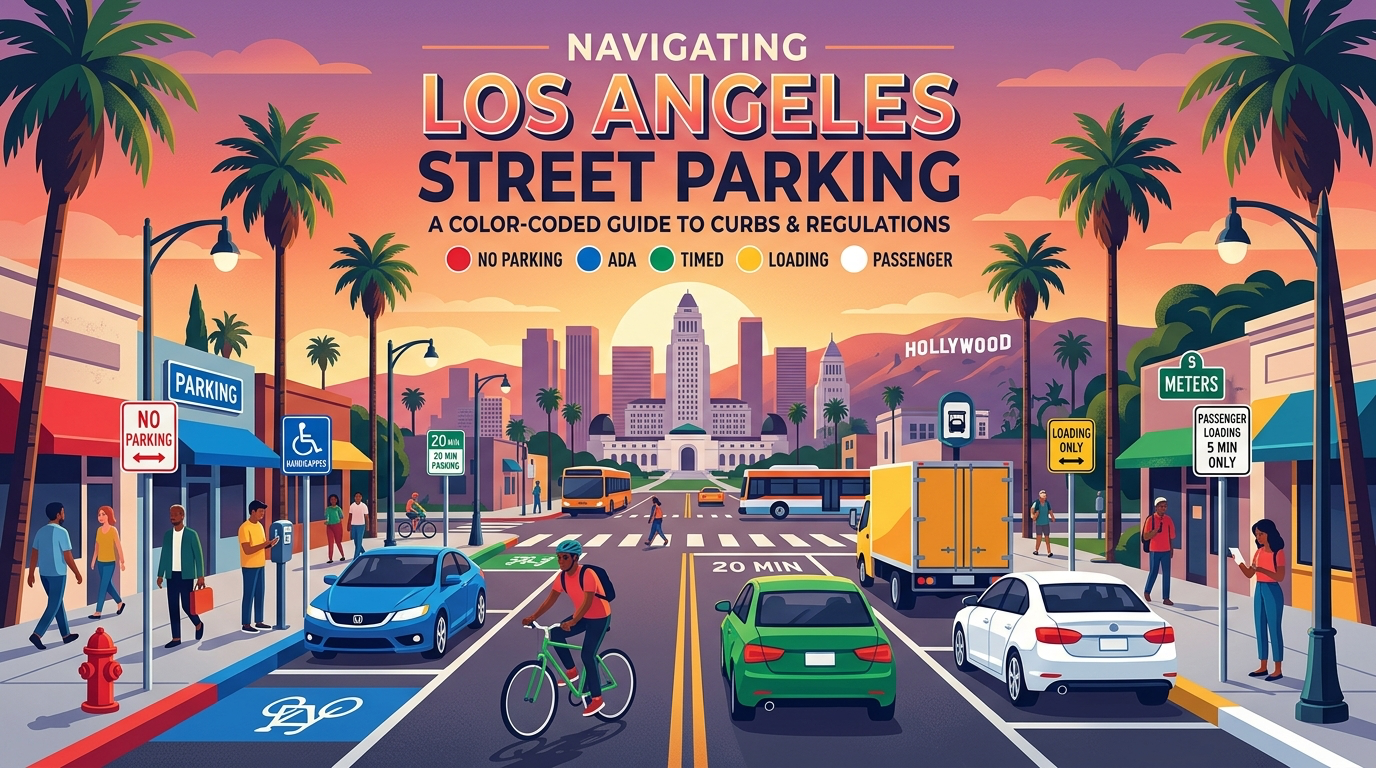
It's common in LA for one side of a street to sweep on a completely different day or time than the other side. A sign reading "8 AM–10 AM Tuesday" on your side of the block doesn't tell you anything about the opposite curb — that side may say "10 AM–12 PM Wednesday," or nothing at all. Colored curb zones can compound this, since a red or green curb changes the rule further on top of the sweeping window.
Always read the sign on the actual side you're parked on. Don't assume symmetry.
What happens if you get the time wrong
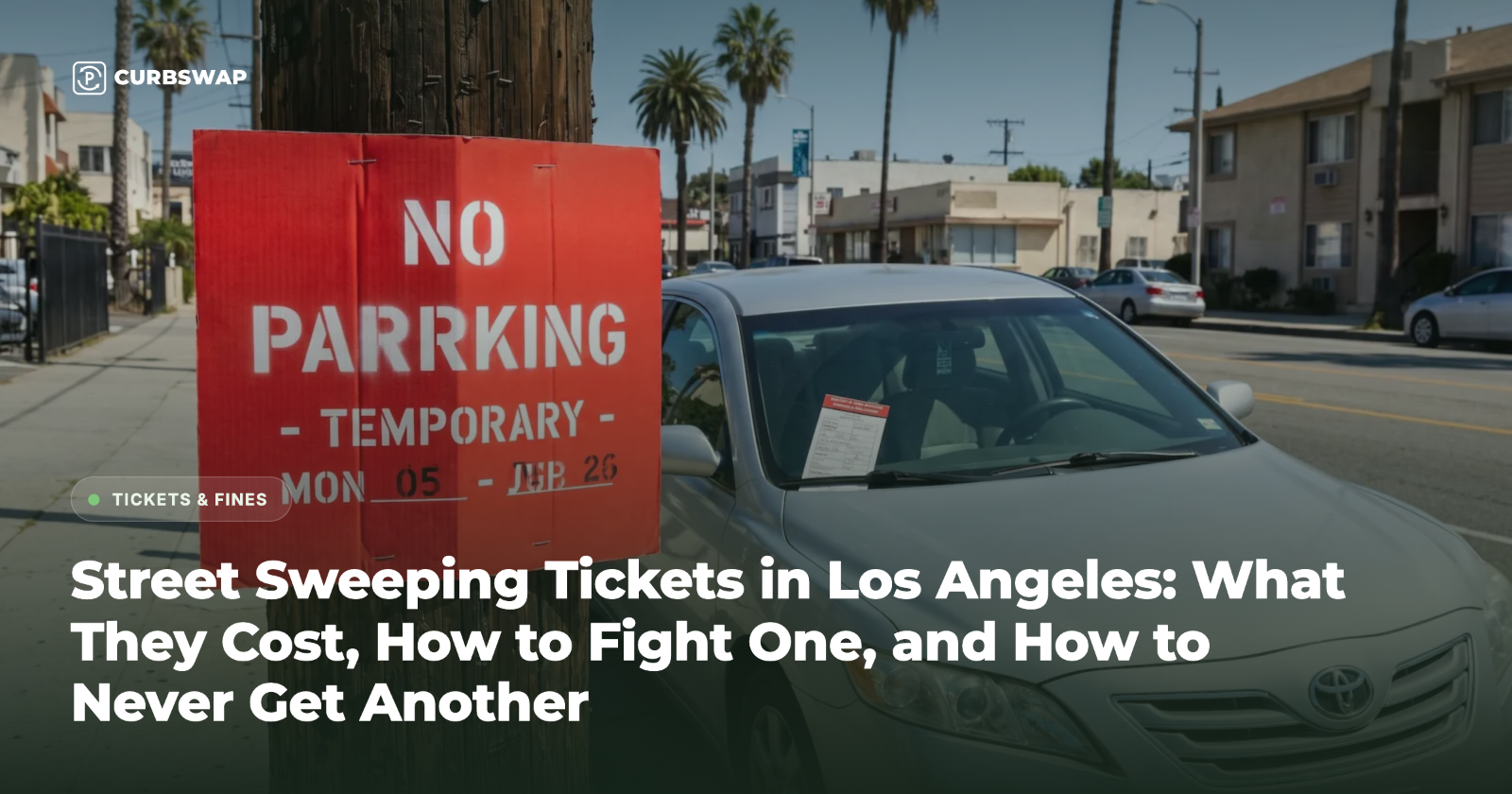
Enforcement goes by the clock on the sign, not the sweeper truck's actual arrival — even right after it visibly passes, the window is still live until its posted end time. A citation issued one minute into the window is valid; one issued one minute after it closes generally isn't. That precision is exactly why "probably around 8" isn't good enough — you need the actual printed hour for your block.
How to find your exact window
The fastest way is the sign itself: LADOT/StreetsLA post the day, hours, and frequency directly on the pole. If you'd rather not walk the block or squint at faded paint, the Curbswap app has a free street-sweeping lookup — search any LA address (or use your location) and it shows the exact day and time window, color-coded on a map, with no account or subscription required.
Once you know your window, the rest is either remembering to move the car in time yourself, or letting a driver do it before the window opens — including while you're out of town, when "what time is it" matters even more because you're not there to check the clock at all.